
“His eyes did not plead; they waited. They held the quiet expectancy of someone who had heard ‘no’ far too many times and still dared to hope. In that stillness, I found myself stepping out of the script written for me by policy, and into a space I hadn’t known I could occupy—a space where care itself became subversive.”
This reflection explores how a seemingly small act of admitting a marginalised child into school, despite bureaucratic policy, became a subversive gesture of care. Drawing on Homi Bhabha’s concept of Thirdspace and bell hooks’ idea of freedom in the margins, the piece positions the educator’s decision as both an ethical and political act. It argues that such actions, taken from the margins, challenge institutional norms and reveal how care can serve as a form of resistance within rigid systems of power.

It was late April, 2008. The school year was gathering pace, and the tide of new admissions had begun to recede when two figures appeared at my office door — a worn-looking man and a tall, adolescent boy. The man, a Pushto[1] speaker, could not converse in Urdu, so I called on a staff member to interpret. He was a daily wage labourer, he told us, and had come at the insistence of his ten-year-old son, Wali Gul, to seek admission into the school.
This was not their first attempt.
They had queued before — face-less, name-less, paper-less — only to be turned away each time at the school’s gate, unable to complete the most basic step: acquiring the registration form. That they stood now before me was not by protocol but by perseverance. There was no need to ask why they had hesitated to come sooner, nor why they had failed at the lower rungs of the process. The silence between us was thick with the knowledge of where power rests and how it speaks.
Wali, tall for his age and silent with his gaze lowered, had never attended school — no early learning, no alphabet, not even the familiarity of holding a pencil. According to policy, a child of this age should be placed in Grade 5. But academically, he would barely meet the entry point of Grade 1. Yet policy also mandated that Grade 1 was only for children aged 5 to 7. And Wali had no papers: no birth certificate, no proof of citizenship — the two essential keys to unlock the institutional gate. They were sent off by the staff for all the right reasons, as the admission policy dictated.
The rules were clear. I knew what I was expected to say. A part of me — trained, compliant, reasonable — began reaching for the standard script. I had almost rehearsed my script and was only trying to make it as polite as I could. But then I looked into the boy’s eyes.
[1] Pushto (also spelt Pashto) is an Indo‑Iranian language of the Indo‑European family and the dominant regional language of Khyber Pakhtunkhwa province in north‑western Pakistan, where the vast majority of the population speaks it as a first language. According to official provincial and census data, Khyber Pakhtunkhwa has a population of around 40 million people, comprising roughly 17 per cent of Pakistan’s total population. Pashto speakers constitute the linguistic majority in the province, with estimates indicating that over three‑quarters of residents use Pashto as their mother tongue, alongside other regional languages such as Hindko and Saraiki in specific areas. The language uses the Arabic script and has tens of millions of speakers in Pakistan and neighbouring Afghanistan.
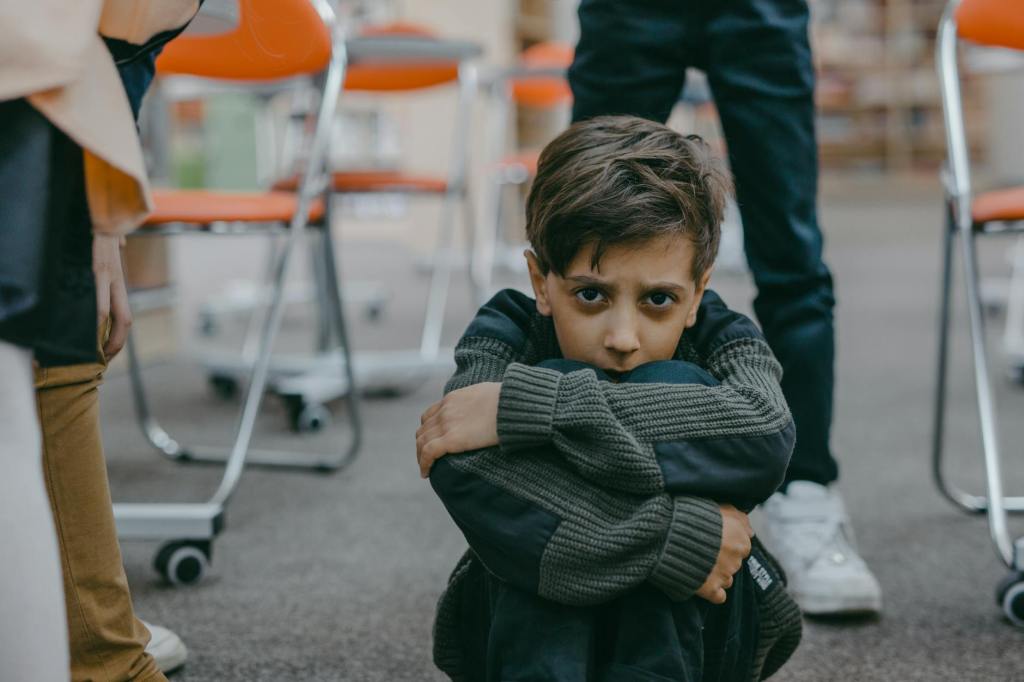
His eyes did not plead; they waited. They held the quiet, unrelenting expectancy of someone who has already been told “no” far too many times and still dares to hope. That stillness undid me. I hesitated — not out of indecision, but because something in me revolted against the cold grammar of regulation.
And then I heard myself say: “You may begin school tomorrow. Grade 1.”
The boy froze. His pupils dilated, as in disbelief. His teacher, whom I had summoned for another matter, was visibly stunned. But it was the father’s response that reoriented my entire understanding. His composed silence was shattered, and I saw him trembling. Then he wept, uncontrollably; he raised his hands skyward, blessing the heavens in guttural sobs. In that moment, the corridor of policy that had hemmed me in so tightly cracked open. I saw then that the rules did not resolve the dilemmas I faced; they reproduced them. Policy, in its neat, codified abstraction, did not serve children like Wali; it erased them. I had always understood these policies as the map of my responsibilities, but that day, I saw them for what they also were: a labyrinth designed to deny entry to those who did not fit its exacting measure.
That day, I found myself standing at the margins with Wali, with his father, not as a gesture of charity but as a recognition of kinship in the experience of being ruled by a logic that does not see us. In that encounter, I discovered what I now call my Thirdspace — a space not written into the formal layout of the institution, but lived and felt at the edges where the human refuses to disappear, chooses to persevere, resist and to live otherwise.

Wali stayed in the school for three years as an informal student. We did not need to formally enrol him to begin teaching. Instead, we designed a fast-paced, abridged curriculum that covered two grades within a single year. We rallied resources, brought in his siblings, and supported their educational expenses through quiet, collective acts of generosity from within the school’s teaching staff.
By the age of 13, Wali was ready to appear in the centralised examination for Grade 5, which he passed as a regular candidate of the school. According to departmental policy, however, the maximum age limit to sit as a regular candidate was 12; over-age students were only allowed to appear as private candidates. I was acutely aware of how difficult it could be for a private candidate to gain admission into high school, so I lobbied for Wali’s appearance as a regular student. Drawing on personal advocacy and exploiting a provision in the examination policy, I persuaded the examination department to treat his case as an exception—and succeeded.
He passed Grade 5, and I arranged for his admission to the nearby secondary school.
Years later, I met him again — a student in Grade 8, representing his school in a science exhibition. He saw me before I saw him. He came running, arms outstretched, and hugged me with the joy that only children can offer without conditions.
That embrace said everything.
He was the first child admitted against policy — but not the last.
And through him, I learned that care is not soft. It is not sentimental. It is subversive.
Thirdspace and Freedom in the Margins: Theorising the Subversive Gesture
The moment I chose to admit Wali Gul—against policy, against bureaucratic logic, against the grain of institutional normativity—I came to inhabit what Bhabha (1994) calls a Third Space of enunciation. This space is not simply a physical or institutional location but a liminal, interstitial terrain where the fixities of identity, policy, and meaning are unsettled. It is where hybridity emerges—not as a blending, but as a negotiation that disrupts the authority of dominant discourses.
In that fleeting yet enduring encounter, I did not reject the system outright, but I re-articulated its meaning. The school was still the school, the rules still in place—but I spoke from between the cracks. Thirdspace, then, became not an escape from structure, but a critical re-positioning within it—a refusal to be entirely captured by the regulatory gaze. As Bhabha (1994) writes, it is “the in-between space that carries the burden of the meaning of culture” and opens up “the possibility of a cultural hybridity that entertains difference without an assumed or imposed hierarchy” (pp. 38–39).
“Margins have been both sites of repression and resistance. They have been the home of subjugated knowledges. They have also been the site of radical possibility, a space of resistance. Enter that space. Let us meet there.” (hooks, 1989, p. 20)
As I look at it from the vantage point of my present, this act of refusal and care was not neutral. It was deeply personal as I knew so well of how it felt to be excluded and dwell in the margins which I had learnt to embrace. Dwelling in that margin and allowing myself to be guided by what the eyes of a child silently demanded, I was also enacting what hooks (1989, 1994) calls freedom in the margins—a radical space of possibility that exists precisely because one is not at the centre.
The act of admitting Wali Gul was not only about making space for his future. It was about reclaiming my own agency as an educational leader working within a very hierarchical bureaucratic system. By breaking the rule, I was not breaking down—I was breaking through. I was choosing the margin, not as a site of lack, but of radical presence. A politics of care was thus not an emotional impulse; it was a political act that emerged from the intersection of care, power, and authoritarian technologies.
To care is not to soften leadership. It is to reframe leadership as ethical, relational, and resistant. In the Kafkaesque labyrinth of education bureaucracy, Wali’s admission was my small but profound act of subversion. It showed that even within the most rigid institutional corridors, freedom does not always lie in exit—sometimes, it emerges precisely in the act of turning inward, of listening carefully, and of responding with compassion where compliance would have been easier.
Post Script:
Years later, when I was serving in a departmental position that included oversight of the examination section, I formally put forward a proposal to the head of the education department. Using Wali’s story as emblematic of countless exclusions caused by rigid policies, I advocated for the removal of the maximum age limit for sitting centralised examinations. The proposal was approved. That single change opened the gates of schooling for many children previously barred by the upper-age restriction from continuing their education.
References
Bhabha, H. K. (1994). The Location of Culture. Routledge.
hooks, b. (1989). Choosing the Margin as a Space of Radical Openness. In Yearning: Race, Gender, and Cultural Politics (pp. 145–153). South End Press.
hooks, b. (1994). Teaching to Transgress: Education as the Practice of Freedom. Routledge.
Author’s Note:
For ethical and privacy reasons, the names of individuals mentioned in this narrative have been anonymised, and specific details regarding departmental structures, policies, and institutional affiliations have been withheld. While the story is drawn from real events and experiences, identifying particulars have been deliberately omitted to safeguard the dignity and privacy of all involved. I believe that the truth of this encounter does not rest in names, locations, or dates—but in the phenomenon it reveals. Acts of exclusion and moments of resistance within institutional systems are universally recognisable, and it is in that shared understanding that this story finds its resonance.
to be continued…


 Saadia Adnan
Leave a reply to Shagufta jamil Cancel reply