

I write from the standpoint of a woman. A woman academic. A woman of colour. A woman of colour whose faith enters the room with her, sometimes before she has spoken a word.
I write from a body that can be read before it is heard and situated before it has introduced itself. I also write from a life profoundly shaped by education: by doors that opened, doors that remained closed, and doors that I learned, sometimes, to push against.
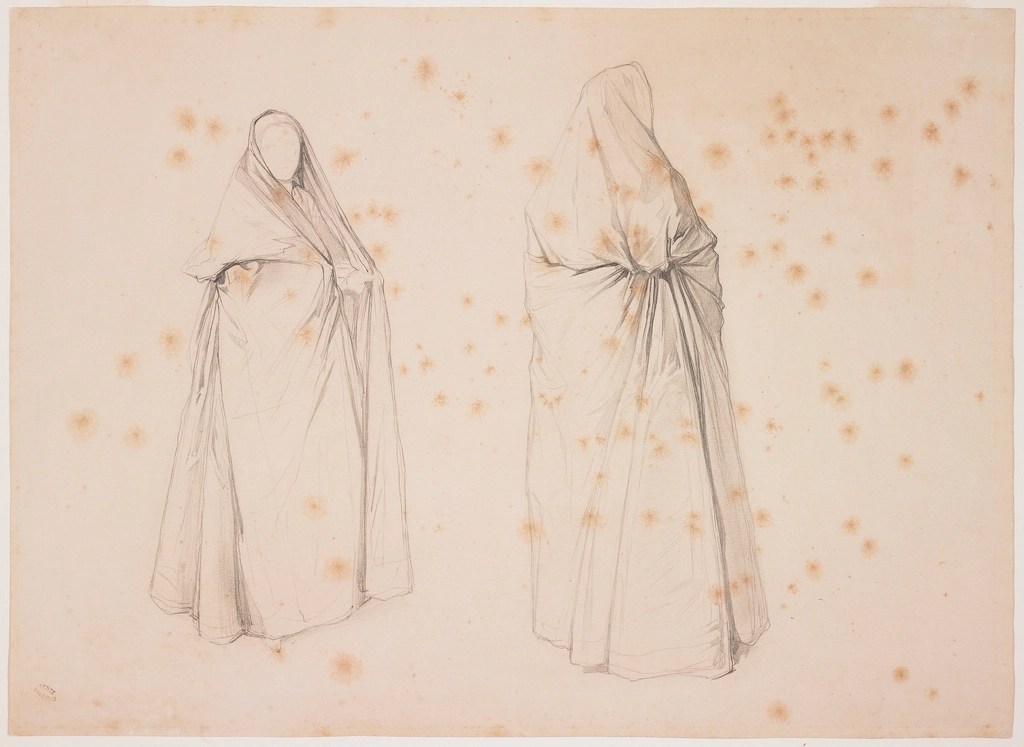
For a long time, I understood that life through the familiar metaphor of a journey. Increasingly, however, another image feels more faithful: a vortex. There have been repeated movements between centre and margin, belonging and displacement, recognition and invisibility. At times I mistook that movement for going in circles. Looking back, perhaps I was spiralling. Each return carried something different: another understanding, another wound, another question, sometimes another version of myself.
What has remained is a thread of hope. I do not mean hope as confidence that difficult things inevitably become better, or the triumphant hope contained in the resilience stories we so easily construct after someone has survived. I mean something quieter: the stubborn possibility that the world as it is given to us is not the only world available to us.
It is from within that possibility that I return to the question I raised in the first part of this reflection: whose life is grievable?
Judith Butler (2009) writes that grievability is a presupposition for the life that matters. I first approached that idea through loss, asking whose deaths disturb us, whose lives are publicly mourned and whose suffering becomes visible only when something irreversible has happened.
The question has since moved closer to everyday life.
If grievability tells us something about which lives matter, then surely it must also tell us something about how we encounter one another while we are still here. Whose vulnerability do we recognise? Whose pain interrupts us? Whose account of an injury do we believe? Whose contribution is noticed, and whose is absorbed so completely into the ordinary functioning of an institution that the person herself begins to disappear from view?
The ordinary work of becoming invisible
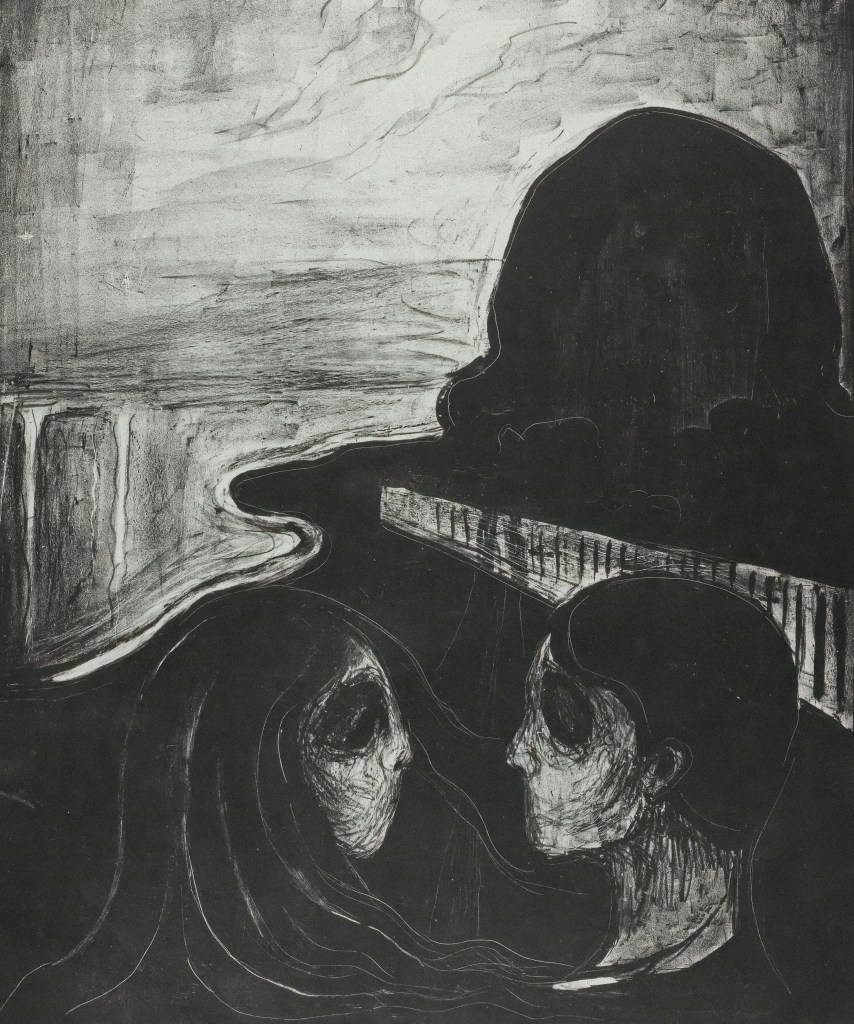
Marcia Langton (1993) describes making the Other invisible as one of racism’s most ordinary operations. I keep returning to this idea because invisibility does not require physical absence. A person can be present, highly productive and professionally successful, yet remain peripheral to the account of what is happening around her.
Many women know versions of this experience. Women of colour can inhabit another layer of it because race, gender, language, culture and faith do not accompany us as separate categories that can conveniently be left outside the workplace. They shape how we enter spaces and how those spaces receive us.
Privilege, meanwhile, does not always announce itself as privilege. Often it appears simply as normality. It is present in the language that belongs effortlessly in a room, in the accent that is never heard as an accent, in cultural codes that require no explanation, and in forms of confidence that are readily interpreted as competence or authority.
From the centre, the centre rarely looks like a centre. It simply looks like the world.
Those standing closer to its margins often see it differently because they are required to learn its codes. They notice when their words need more careful framing, when confidence risks being read differently, or when belonging appears to require continuous demonstration.
I have increasingly thought about how much self-management happens in these spaces.
People who have experienced marginalisation often become remarkably skilled at absorbing things. We learn to manage not only our work but our responses to what happens around us. We measure our words, regulate anger, translate discomfort into language that will not make others uncomfortable, and sometimes minimise our own vulnerability so that it cannot be used to question our professionalism.
There is a cost to becoming so accomplished at this.
If we manage our pain too successfully, others may never have to see it.

When excellence becomes expectation
I have heard this in the experiences of women educational leaders. One woman principal once described working extremely hard, producing strong results and meeting everything expected of her. Yet achievement did not automatically become recognition. She felt that after doing the work, she had to perform another kind of labour simply to make that work visible.
Her observation stayed with me because it captures something larger than an individual experience. For some people, achievement readily becomes evidence of ability. Their work is noticed, attributed and remembered. For others, sustained competence gradually becomes expectation.
She manages because she always manages. She accepts the additional work because she can be relied upon. She resolves the difficulty because people know she will.
Eventually, what required exceptional effort becomes ordinary because the person performing it has made it look ordinary.
There is something deeply unequal about having to perform the work and then perform its visibility.
Recognition in this sense is not vanity. It is an acknowledgement that a particular person made a particular contribution and that her presence changed something. Without it, organisations can become highly dependent upon a woman’s labour while remaining surprisingly indifferent to the woman providing it.
A person may become indispensable for what she does while remaining remarkably dispensable as the person who does it.
When authority can be taken away
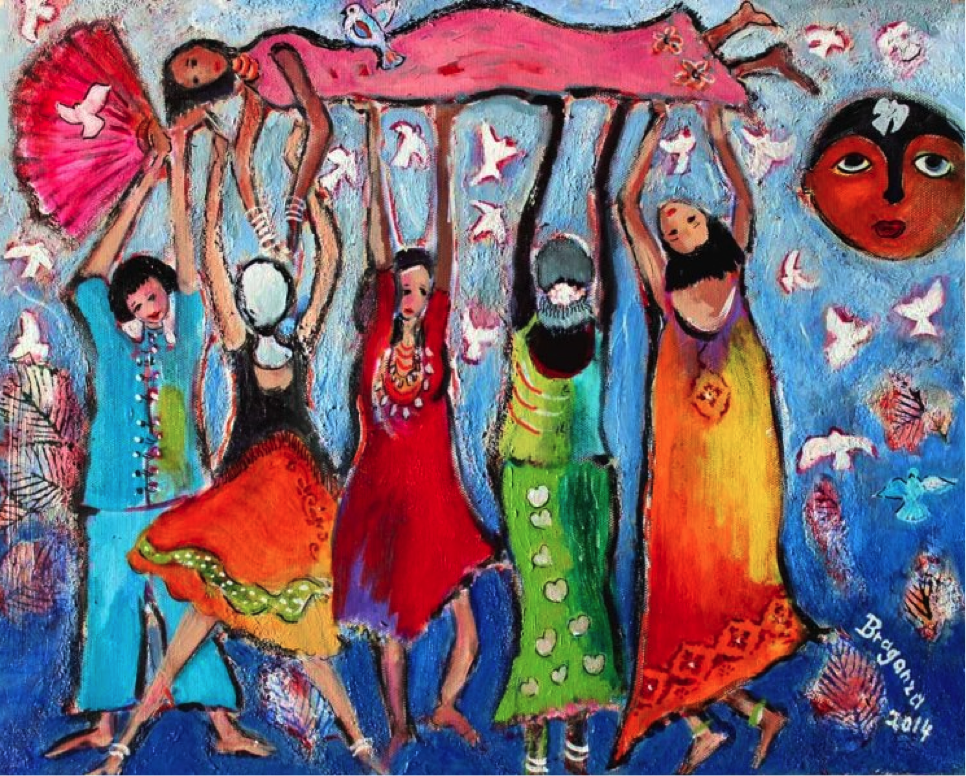
Another woman principal described being appointed to a leadership role in which she was responsible for training others. A man questioned why she had been appointed. Why was she leading? Why was she the trainer?
The point is not that appointments or authority should never be questioned. The part that has stayed with me is how readily an authority that had already been established became provisional.
Her competence suddenly needed to be reconsidered because somebody questioned whether she should occupy the role at all. And the position could be taken away.
Gendered ideas about authority often operate in precisely these ordinary ways. Some people arrive in positions of authority and are assumed to belong there unless they demonstrate otherwise. Others can occupy the same position while continuing to carry the burden of proving that their presence in it is legitimate.
For women of colour, that burden can become difficult to disentangle. Was the response gendered? Was it racialised? Was it about language, culture or faith? Was it simply personality?
Sometimes we cannot know. But lived experience does not come with control variables.
I cannot enter a room as a woman first, a racialised person second, a multilingual person third and a woman of faith fourth. I enter as a whole person. The demand that I isolate precisely which part of myself produced a particular response can itself become a way of postponing engagement with what happened.

When telling becomes another labour
This is also where gaslighting enters my thinking.
There are moments when a person tries to name an experience of exclusion, diminishment or unfairness and finds that attention quickly moves from what happened to whether she has interpreted it correctly.
Perhaps you misunderstood.
Perhaps that was not the intention.
Perhaps you are taking this too personally.
Perhaps race or gender had nothing to do with it.
There is nothing inherently wrong with questioning an interpretation. Context matters and different readings of an encounter are possible. The problem begins when disbelief becomes the default response to certain kinds of testimony.
Then another form of labour begins.
The person replays the conversation. She checks the email again. She chooses her words more carefully. She removes the anger from the account because anger might make her less credible. She makes the story measured enough, calm enough and professionally acceptable enough to be heard.
Eventually, the original event is no longer the only thing under examination. The person describing it is being examined too.
This is one of the things I have come to understand about life at the margins. We can become so accustomed to absorbing, explaining and regulating that vulnerability itself begins to feel dangerous. We learn to micromanage our emotions rather than acknowledge how deeply something has affected us.
There is an injustice in being diminished. There is another injustice in having to make that diminishment palatable before it can be recognised.

Grievable while living
This is why Butler’s question continues to trouble me, inviting me to reflect.
If grievability is a condition of the life that matters, perhaps being grievable while living means that our diminishment registers before it becomes catastrophic.
It means that a woman’s exhaustion does not have to become collapse before anyone asks what she has been carrying. Her work does not need to disappear before its value is recognised. Her authority does not have to be removed before somebody asks why it was so easily contested. Her account of racism, sexism or exclusion does not have to arrive with incontrovertible evidence before it deserves careful listening.
To take someone’s testimony seriously is not to surrender judgement. Neither is it to assume that every difficult encounter can be neatly classified as racism, sexism or discrimination. It is to begin from the premise that the person standing before us is sufficiently consequential for her account of her own life to matter.
Perhaps this is one way of understanding what it means to move beyond tolerance towards recognition.
We do not need to wait until someone leaves, breaks, withdraws or disappears before asking what was happening to them while they were among us.
And so another question now sits beside the one with which I began.
Not only whose life is grievable?
But whose presence matters enough that their diminishment troubles us while they are still here?
Some forms of disappearance begin long before anyone physically leaves. They begin when excellence becomes expectation, when contribution goes unnamed, when authority remains conditional, when vulnerability must be disguised as composure, and when the person who speaks about an injury has to work harder to establish her credibility than others have to work to hear her.
I want to hold onto the thread of hope.
H.O.P.E.
Not as a promise that institutions will inevitably become more just, nor as another demand that those at the margins become more resilient.
Hope, for me, rests also in refusing to accept these arrangements as inevitable.
The world as it is given to us is not the only world that can exist.
And perhaps one small beginning is learning to recognise one another before loss forces us to.
References
Butler, J. (2009). Frames of war: When is life grievable? Verso.
Langton, M. (1993). Well, I heard it on the radio and I saw it on the television: An essay for the Australian Film Commission on the politics and aesthetics of filmmaking by and about Aboriginal people and things. Australian Film Commission.


Leave a Reply