
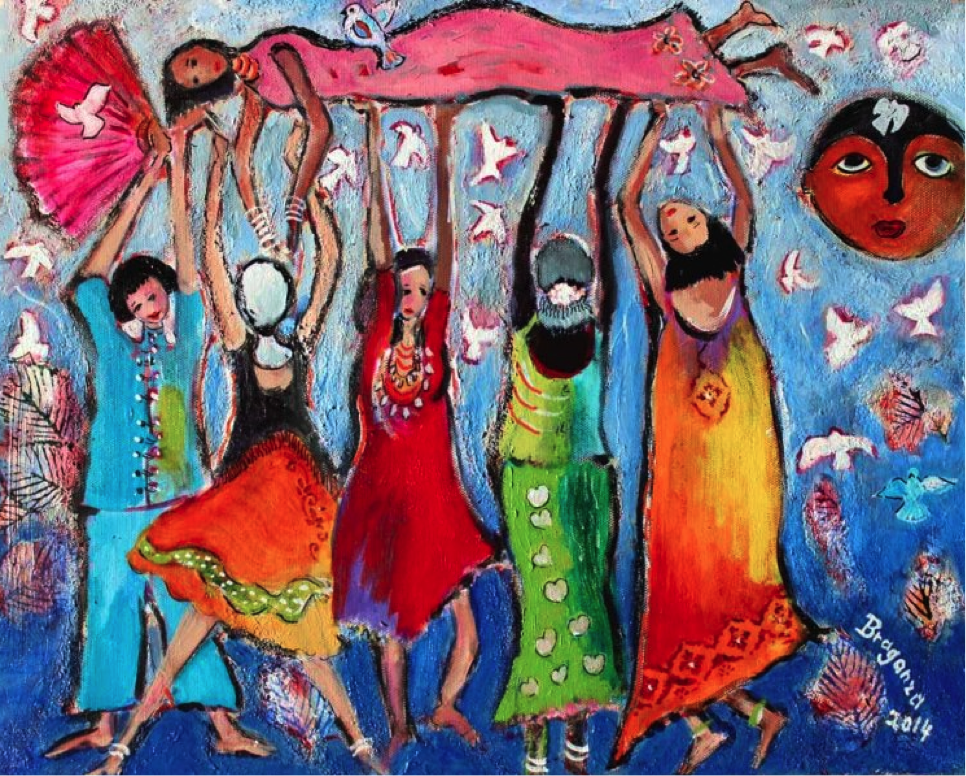
About (not)New Thread on Politics of Gender:
In earlier reflections under Politics of Care, I wrote about the quiet labour of care that often unfolds in the margins of educational leadership. Yet care itself is never neutral. It is shaped by gendered expectations, by poverty, and by the unequal social arrangements that structure everyday life.
This reflection begins another thread in this space—Politics of Gender.
I chose to begin this series on 8 March 2026, International Women’s Day—not only to celebrate the strength and resilience of women, but also to acknowledge the quieter, often unseen struggles that many women continue to endure. The story that follows is about one such woman whose life revealed, on an ordinary day during my principalship, how poverty and patriarchy can become painfully entangled in the everyday realities of womanhood. It reflects the raw yet poignant lived experiences of many women in a country that continues to rank among the lowest on the Global Gender Gap Index (WEF, 2025).
The Encounter
I still remember the first time I saw Marjaan standing outside the school gate.
It was my second year as the principal of a public school located in a military cantonment area. During recess that afternoon, I was doing what had become part of my routine practice—walking around the school grounds to ensure everything was in order. The school had a large enrolment, and supervision during break time required constant attention. Teachers were stationed across the playground for yard duty, and I usually used these moments to quietly observe the rhythm of the school.
Security protocols were strict. This was a period when security alerts were high, and schools, especially those located in military cantonments, were considered sensitive spaces. The gates remained firmly closed during recess. Students were not allowed to leave the premises, and visitors were not permitted to enter until the break ended.

As I passed by the main gate during my round, I noticed a woman standing outside. She was knocking on the gate and speaking to the gatekeeper. At first, I simply observed from a distance and continued with my round.
About ten minutes later, when I passed by the gate again, she was still there. She stood close to the metal bars, leaning slightly forward, trying to look inside the school grounds with a mixture of urgency and anxiety.
The gatekeeper appeared to be explaining something to her repeatedly.
This time I walked closer.
Seeing me approach, the gatekeeper quickly explained that he had been trying to tell the woman to leave and return after the break, but she was insisting that she needed to take her children home immediately.
I stepped closer to the gate and spoke to her gently, explaining the school’s security rules. I told her that if she wished to enter the school, she would be most welcome once the break ended.
She looked at me with a mixture of embarrassment and desperation and introduced herself. Her name was Marjaan.
Almost pleading, she explained that she needed to take her four children home because they had come to school hungry. There had been nothing in the house that morning to feed them.
In that moment, I was thinking within the boundaries of the school’s procedures (later, I confessed my ignorance). I asked her gently why she could not bring something to the school for the children to eat. We could easily pass it on to them during the break.
She looked at me, visibly confused.
It seemed as though she was searching for the right words, unsure how to explain something that perhaps felt too simple, or too embarrassing, to say aloud.
After a brief pause, she spoke quietly.
The only thing she could offer her children that morning, she said, was a cup of tea sweetened with jaggery and roti (flat bread). She had thought of bringing it to them, but did not know how she could carry a teapot and bread all the way to the school.
As she spoke, I tried to remain calm so that she would not feel judged. Her words carried a quiet dignity, but also the unmistakable weight of poverty.
I asked her to wait for a moment. Taking the names of her children, I asked one of the staff members to find them in the playground and bring them to the gate.
A few minutes later, four beautiful children appeared, two girls and two boys of different ages. They walked quietly out of the gate and joined their mother.
I watched as they left together.
That was my first interaction with Marjaan, but not the last.
Then (not an)Ordinary Story of A Woman
Over the next five years, there would be many more, and I learned to know her better.
She was the mother of seven children and married at the age of 15-16 yrs to the man her father chose for her, who was a junior clerk. Once I became aware of her life situation, I made sure she knew she was welcome to come to the school whenever she needed help regarding her children. At first, she was hesitant. She never thought that she did not belong inside a place like the school because she had never been to school herself. In her life, it was never even an option. In the beginning, she was reluctant to come in as she seemed unsure about how to speak with teachers or with the principal.
Sensing that early, I made sure to take her to my office whenever she visited, and I would simply talk to put her at ease. It was just a small effort to respect the dignity of another woman who was not as privileged as I considered myself. That also helped to take actions to help children in a better and more informed way.
It was during one of those visits, a few months later, that I noticed something she was trying to hide.
As she entered my office, she kept adjusting her shawl around her face.
But I could see a large bruise. I asked whether something had happened, perhaps an accident or if she needed any medical help.
What followed was a moment that revealed another (ugly) layer of the world she was carrying.
With tears in her eyes, she told me it was not an accident.
Frustrated with the lack of resources to meet the family’s needs, her husband had beaten her.
Before me sat a woman who was a caring mother, a faithful wife, and yet a deeply wounded human being, trying quietly to hold on to her dignity. With all those titles she had, she was also the ‘punching bag’.
Needless to say, during my professional life, although this was my first encounter of witnessing this blatant violation of human rights for a woman, it was not the last. However, it was the first to provide me with another lens to see the extraordinary in the mundane happenings of everyday life.
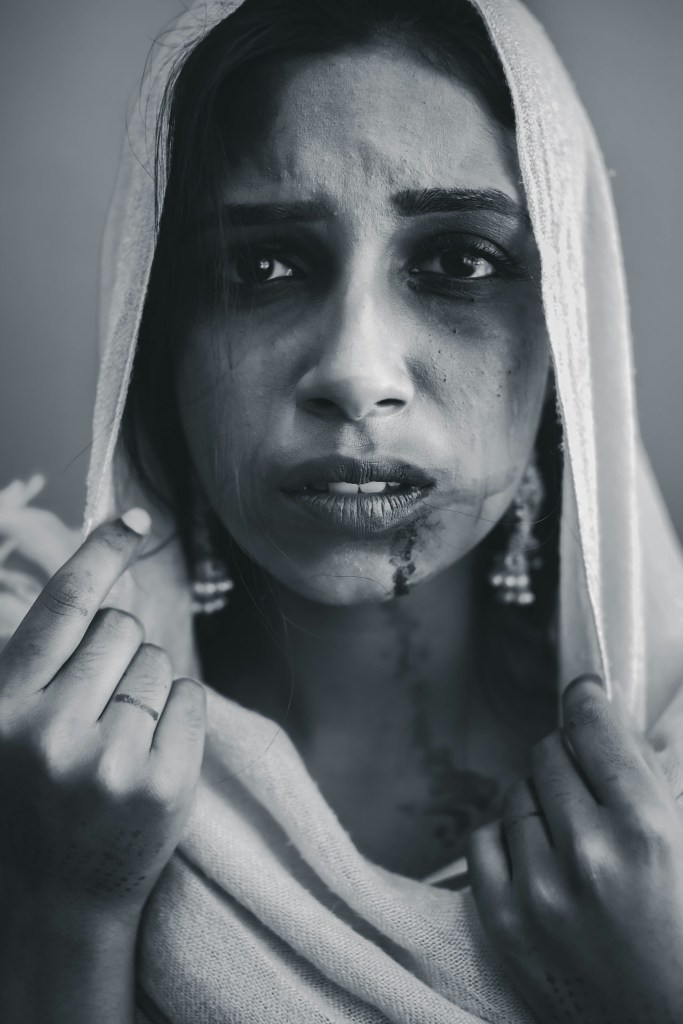
Incidents like this reminds me of Muriel Rukeyser, who wrote in 1973 “What would happen if one woman told the truth about her life. The world would split open” (Sewell, 2013). The world has not.
The Manifestation
Two stark realities shaped Marjaan’s life: poverty and patriarchy. Their entanglement multiplied the weight of unequal power relations that many women are compelled to live through, without knowing or having the power to break this vicious cycle of one enforcing the other.
What struck me most at the time was how these realities converged at the threshold of the school gate. Educational institutions are often imagined as neutral spaces focused on learning and development. Yet they frequently become sites where the broader inequalities of society quietly surface. In this instance, the school became a point where institutional rules, security protocols, poverty, and gendered vulnerability intersected.
For those of us working in educational leadership, such moments challenge the narrow managerial understandings of leadership that dominate policy and professional discourse. Leadership in these contexts is not only about administration, performance metrics, or compliance with regulations. It is also about encountering the lived realities that shape the lives of students and their families.
Marjaan’s story reminded me that educational leadership often unfolds within a complex terrain where care, authority, and social inequality are deeply intertwined. It taught me that the lived realities of school communities do not operate separately from the policies that regulate them; rather, they become entangled in ways that shape everyday decisions, relationships, and possibilities.
With every encounter with the lived realities of educational communities, I learned that educational leadership is far more than institutional management. Rather, it is a lived and contextual phenomenon, unfolding within the complex entanglements of power, care, and social realities that shape the lifeworlds of schools.
References
Sewell, L. (2013). Feminist Poetries. In J. Ashton (Ed.), The Cambridge Companion to American Poetry since 1945 (pp. 109–126). Cambridge: Cambridge University Press.
World Economic Forum. (2025). Global gender gap report 2025. https://www.weforum.org/publications/global-gender-gap-report-2025/
Author’s Note:
For ethical and privacy reasons, the names of individuals mentioned in this narrative have been anonymised, and specific details regarding departmental structures, policies, and institutional affiliations have been withheld. While the story is drawn from real events and experiences, identifying particulars have been deliberately omitted to safeguard the dignity and privacy of all involved. I believe that the truth of this encounter does not rest in names, locations, or dates—but in the phenomenon it reveals. Acts of exclusion and moments of resistance within institutional systems are universally recognisable, and it is in that shared understanding that this story finds its resonance.
to be continued…


 Saadia Adnan
Leave a reply to Saadia Adnan Cancel reply