
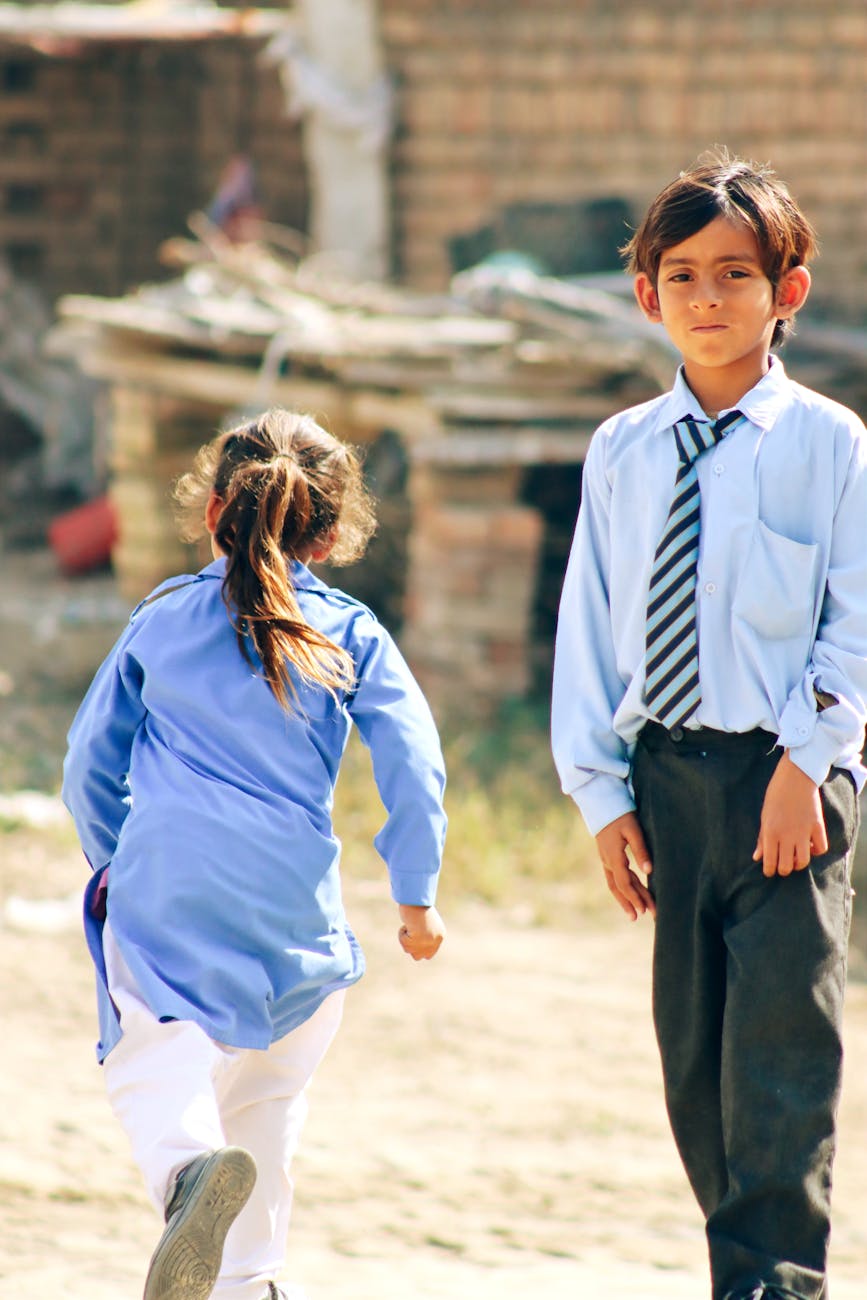
As the car turned into the narrow driveway of the only girls’ primary school in the village, I noticed her stepping out of the school gate. Our gaze met for a brief moment, and I could see her eyes brimming with tears. There was a quiet helplessness in her face, the kind that does not ask for attention because it has already learned not to expect it.
When I stepped out, the principal was waiting at the entrance. After a brief greeting, I asked about the girl.
“She’s in Grade Five,” the principal said. “One of our brightest.”
She had been absent for a month without any information. The teacher, concerned, had sent word through other students from her neighbourhood, asking her to return.
Today, she came.
But not to resume.
She had come to say she would not be coming back.
Her mother had taken up work as a domestic helper in a nearby affluent neighbourhood. Someone needed to stay home. Someone needed to care for the younger siblings. That someone was her. There was no drama in the explanation. No resistance. Just a quiet acceptance of what needed to be done.
The principal paused, then added, almost as an afterthought, “This happens often.”
And that was perhaps the heaviest part.
Not that a bright girl had left school.
But that her leaving did not surprise anyone.
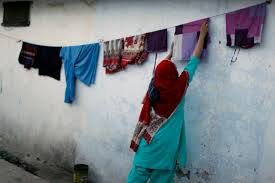
It was my first visit to that school after being posted as a field officer in this rural sector, with the mandate to oversee more than eighty schools, boys and girls, primary and secondary. I had arrived with the expectation of systems, structures, and performance indicators. Instead, I encountered a story.
The first story.
And, as I would soon realise, not the last.
Entering the Field of Fleeting Encounters
I still remember those long drives into the rural sector—dust rising behind the vehicle, schools scattered across landscapes that felt both expansive and forgotten. As a field officer with the mandate to oversee over eighty educational institutions, I thought I was there to monitor, to manage, to ensure systems worked. In rural sectors, the sub-offices are to facilitate local schools and communities to save them from travelling to the city centre in case they need any support. But more to monitor and to ensure they are under surveillance.
What I did not anticipate was how deeply those journeys would unsettle what I thought I knew about education, justice, and choice.
In these communities, scarcity was not an abstract condition; it was a daily calculus. And within this calculus, decisions about education were rarely neutral. They were quietly gendered as noted in countless stories of disappearing girls from the schools.
When resources were meagre, the decision appeared almost naturalised: invest in the boy. Send him to school, sometimes even to a private one if the family could stretch its means. The girl, meanwhile, was repositioned—her labour redirected to sustain the household. She stayed back to look after younger siblings, to tend to cattle, and to assist her mother, who left early each morning to work as domestic help in the more affluent sectors of the city. Her work was essential, yet invisible. Her absence from school was neither questioned nor mourned. It was understood.
What struck me most was not only the inequality, but its ease. And, the exclusion without question.
There was no dramatic rupture when a girl disappeared from the classroom. No formal withdrawal. No institutional alarm. She simply stopped coming. Whenever I followed up, the explanations were always reasonable, almost rehearsed: “There is no one at home.” “Her mother is unwell.” “We will send her next year.” But next year rarely came.
It became evident to me that girls’ education was not actively opposed—it was simply not prioritised. And this distinction matters. Because what is not prioritised can be quietly withdrawn without resistance.
In school meetings and with those of local communities, I would often sit with parents and ask about their children’s futures. Conversations about sons were filled with aspiration—careers, opportunities, mobility. Conversations about daughters were framed in modest terms: “She will study till she can.” “Passing the level is enough for her. We don’t let our girls take a job.” Education, for girls, was not imagined as a pathway; it was treated as a phase. Until she is not needed elsewhere.
I began to see how these decisions were not isolated acts of discrimination but were embedded in a broader social fabric. A fabric where gender roles were learned early, often from within the home itself. Where daughters were subtly trained into accommodation and sons into entitlement. Where even accomplished women, leading schools and managing institutions, spoke of lives circumscribed by permissions—permissions to travel, to study further, to step beyond what had already been decided for them.
And yet, within these same spaces, I encountered resistance—quiet, fragile, but persistent.
I remember girls who excelled academically despite all odds, outperforming their male peers with a determination that seemed almost defiant. I remember teachers, mostly women, who worked tirelessly, not only to teach but to protect the fragile continuity of these girls’ education. I remember conversations in School Management Committee meetings where I would insist, sometimes gently and sometimes firmly, that daughters deserved the same investment as sons.
I would ask parents, “If she is capable, why should her journey stop here?”
Some would listen. Some would nod. A few would change.
But the larger structure remained intact.
Whose education is negotiable?
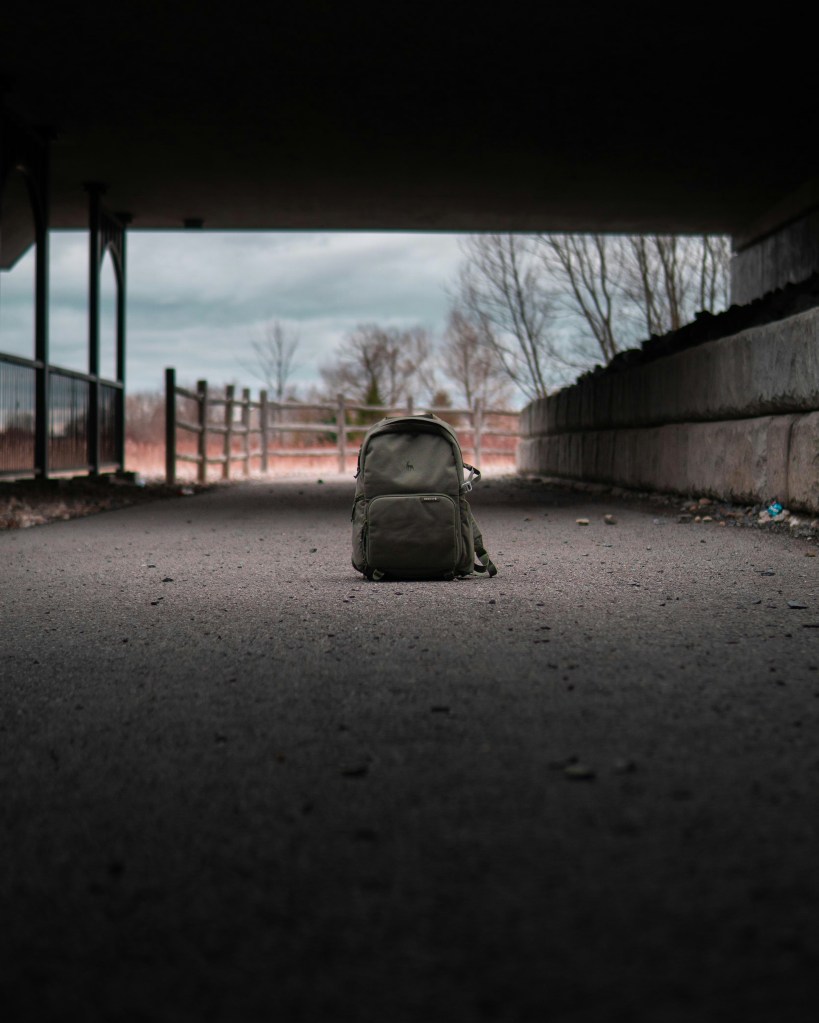
What I came to understand through these experiences is that gender injustice in education does not always manifest as overt denial. More often, it operates through quiet permissions—through what is allowed, what is delayed, and what is deemed unnecessary. It resides in the taken-for-granted assumptions about who education is for, and what it is worth.
In these rural landscapes, education was never just about schooling. It was about whose future was imagined, and whose was quietly contained.
And perhaps what unsettled me most was recognising how normal all of this felt—to those living within it, and at times, even to myself as I navigated it. How easily one can begin to accept these patterns as inevitable, as cultural, as beyond intervention.
But they are not.
They are produced, sustained, and therefore, they can be interrupted.
Yet interruption requires more than policy. It requires a disturbance of the everyday conversations at home, of expectations placed on daughters, and of the silent hierarchies that determine whose education is negotiable.
Because until that shifts, the classroom will continue to empty—not through force, but through quiet consent.
Author’s Note
This piece is part of the ongoing Politics of Gender series, where lived experiences are shared not as isolated incidents but as windows into the deeper structures that shape them. For ethical reasons, all individuals remain anonymised, and no identifying institutional or departmental details have been disclosed. While the narrative draws from real encounters, care has been taken to protect the dignity and privacy of those whose lives intersect with these accounts.
Writing such stories is never easy. There is a certain weight that accompanies them: a knowing that what is being written is not exceptional, but painfully ordinary. These are not singular moments of injustice, but recurring patterns, quietly lived and often normalised. It is precisely this ordinariness that makes them difficult to carry, and yet necessary to tell.
The value of this reflection lies not in names or locations, but in what it reveals about the subtle, pervasive ways in which gendered hierarchies are produced and sustained. The quiet withdrawal of a girl from school, the ease with which her absence is absorbed, and the rationalities that justify such decisions are not confined to one place. They are part of a broader social fabric that many will recognise.
It is in this shared recognition that the story finds its purpose.
She did not leave with noise
just a quiet folding of her future
into the corners of a home.A name erased from the school register,
a presence absorbed into duty
as if learning could wait,
and she could too.

 Saadia Adnan
Leave a comment