

There are times when my life felt less like a journey and more like a vortex.
Not a straight path, nor even a circle that faithfully returned me to where I had begun, but a movement between depth and circumference. I was repeatedly drawn into the centre of lived realities that I did not choose—gendered expectations, performative demands, professional and yet relational obligations—and just when I believed I had reached the centre, there was a moment when I found myself pushed back towards the edges, only to be drawn inward again.
For years, I mistook this movement for stagnation. I thought I was simply going around in circles. Looking back, I realise I was not circling; I was spiralling. Each return carried new knowledge, new wounds, and a different self.
I write today from the standpoint of a woman. A weathered woman, an academic and researcher, had an educational leadership career and lives in the entangled web of life.
Not because gender explains everything, but because it shaped the currents that determined where the vortex carried me and how difficult it was to resist its pull. The choices available to me were never simply my own. They were produced through histories, institutions, expectations, and silences that quietly organised what was imaginable and what was not.
From this vantage point, I have begun to see that even the documents that appear most objective carry the traces of these struggles. A curriculum vitae is often read as a neutral record of achievement. Yet mine tells another story. Between each qualification, each appointment, each interruption and each return lie negotiations, sacrifices, exclusions, and acts of persistence that never appear on the page.
My CV, then, is not merely a record of a career. It is a site of struggle.
I wanted to study medicine…
then to study chemistry…
then I fell in love with psychology…
then the long shot of CSS…
then the language of the master…
then came the time to fold the dreams…
I started teaching and found my space…
-Saadia
The CV Has No Section for Folded Dreams
It was one of those ordinary days when I was populating my educational qualifications and polishing my CV that a memory returned to me with unexpected force. It was from my last successful interview at the FPSC[1] board room. I was sitting before a distinguished panel of senior bureaucrats, people trained to read files, forms, marks, ranks, timelines, and trajectories. One of them looked at my qualifications and asked why my educational path did not appear linear.
The question was not hostile in any obvious sense. Yet it carried a tone I knew too well. It quietly placed the responsibility on me, as if the unevenness of my academic journey was evidence of personal confusion, lack of planning, or insufficient seriousness. It was as if I had failed to know, from the beginning, the proper path I should have followed.
My answer then was simple: I learnt to take whatever opportunity came my way because I did not have the luxury of choosing what I wanted to do.
But the question stayed with me.
Years later, as I return to that moment, I realise that the question was never merely about my CV. It was about the politics of reading a woman’s life through institutional eyes. It was about the assumption that a respectable professional life should unfold in a straight line, as if all lives are given the same road, the same permissions, the same room to imagine, choose, leave, return, and begin again.
My path was not linear because my life was not lived in a neutral world.
[1] FPSC stands for the Federal Public Service Commission, which is an independent department of the Federal Government of Pakistan, legally mandated to recruit suitable candidates for gazetted positions through a highly competitive process.

I wanted to study medicine. There was no dramatic refusal. Not outright. Not in so many words. But the answer had already been written in the margins, where women’s dreams often live, annotated, postponed, softened, and crossed out before they are even spoken. My father did not believe it was appropriate for girls to move to another city, let alone live in a hostel. The door closed, not with a bang, but with the slow, deliberate turning of a latch.
So I adjusted, as women are so often taught to do.
I shifted course. I studied for a Bachelor of Science and developed a passion for chemistry. I wanted to pursue it further. But when I applied for a Master’s degree, I was offered places in universities in other parts of the country, not in my own city. And once again, my father did not say no. He simply did not say yes.
There are many ways to refuse a woman’s dream. Silence is one of them.
Time passed. Application windows closed. Possibilities narrowed. Then, almost as an afterthought, he arranged my admission into a Master’s in Applied Psychology at a girls-only postgraduate institution. It was safe. It was local. It was acceptable. Quietly, I slipped into the class and began again.
And then something unexpected happened.
I grew to love it.
Clinical psychology came alive for me. I studied patients, wrote case reports, sat beside people who were being slowly unravelled by pain. I saw how the mind bends under a weight it cannot name. I began to understand suffering not only as an individual condition, but as something carried in bodies, families, histories, and silences. I thought, perhaps this is what I was meant to do.
But to practise, I needed a diploma from another city, a four-hour drive away. My father declined again, gently. It was not necessary. It was not safe. It was not proper.
The words changed. The structure remained.
I applied for jobs as a psychologist, including in the military and elsewhere. Again, the answer was no. Too many men. Not respectable enough. But there was a solution. I had also completed a teaching degree in parallel, just in case. Why not use that?
So I did.
I applied. I was selected. I began teaching. It fit within the lines.
And then, one day, I asked him if I could sit the Central Superior Services exam. It was a long shot, Pakistan’s most competitive civil service examination, surrounded by an aura of prestige, ambition, national service, and social mobility. He laughed and said, “Go ahead. I’ll bring the application form.”
I was twenty-one. I sat the exam with no coaching, no structured preparation, and no permission to dream beyond the joke of attempting it.
I passed.
Not high enough to secure a posting, but enough to shake the ground beneath his quiet disbelief. Enough to show that something was there. A possibility. A force. A mind that had not been given room, but had still found a way to move.
I wanted to try again, this time with preparation. I asked to study English literature to strengthen the foundation for another attempt. He agreed. I stayed in the same city. It was safe. It was permissible. But then, as if startled by my determination, he decided it was time.
He arranged my marriage.
I was twenty-four.
So, again, I adjusted. I folded the dream and put it away, like an heirloom silk shawl worn once and then stored somewhere out of reach.
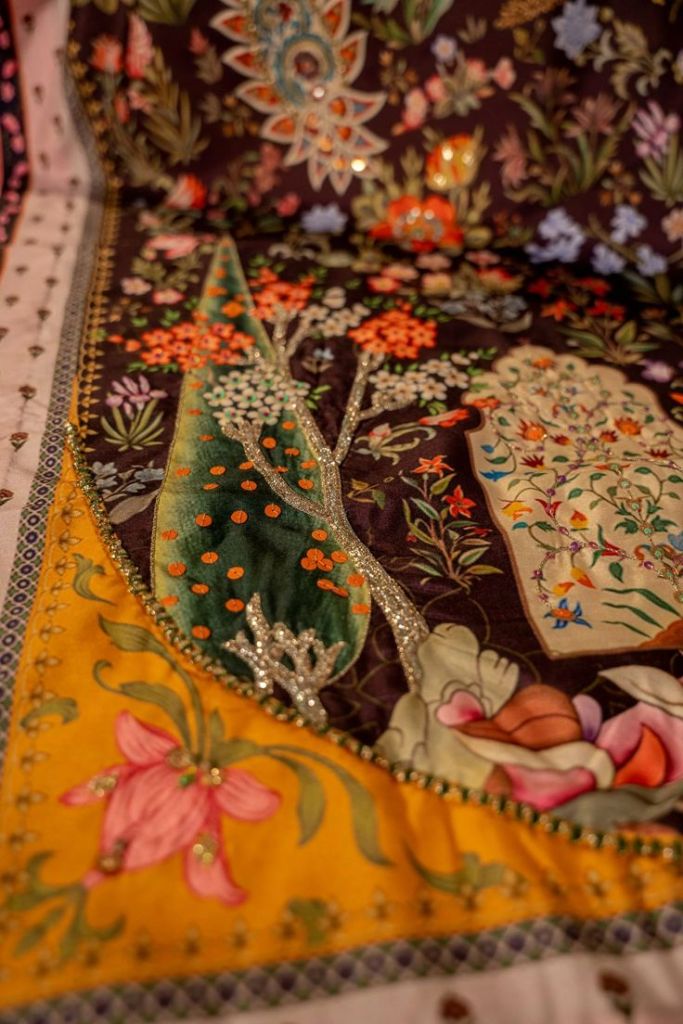
This is why, when I look at my CV, I do not see a simple list of qualifications. I see a map of negotiations. I see doors approached, doors half-opened, doors quietly closed. I see ambitions translated into acceptable forms. I see the grammar of patriarchy disguised as care, honour, safety, propriety, and protection.
This is where the CV becomes political.
A CV appears to be a clean document. It lists degrees, positions, institutions, dates, publications, and achievements. It rewards sequence. It admires progression. It gives the impression of a life moving forward with intention and control. But what it cannot easily hold are the abandoned routes, the deferred desires, the permissions sought, the refusals absorbed, the silences endured, and the emotional labour of repeatedly becoming someone slightly different from the person one had imagined.
A CV has no section for folded dreams.
It does not ask why a girl did not leave her city. It does not ask who decided what was safe. It does not record the application forms never submitted, the diplomas never pursued, the jobs never taken, the cities never entered, the hostels never lived in, the lives never tried. It does not name the hand that turns the latch softly enough to avoid being called violent.
And yet, those absences shape the document as much as its visible lines.
Perhaps this is why that interview question felt so heavy. In that FPSC room, my life was being read as a file. I was asked to account for discontinuity without being given a language to speak of constraint. The panel wanted coherence. Institutions often do. They prefer lives that can be read quickly, lives that appear disciplined, uninterrupted, purposeful, and measurable.
But many women’s lives do not unfold as straight roads. They unfold as corridors, detours, waiting rooms, locked doors, and sudden openings.
There is something deeply Kafkaesque in this. Kafka’s worlds are filled with offices, files, corridors, judges, clerks, and systems whose rules are never fully revealed. The individual is summoned, questioned, assessed, and made to justify herself before an authority that appears rational but remains opaque. In such a world, one is always already answerable, even when one does not know the charge.
For many women, patriarchy works like this labyrinth. It does not always announce itself as prohibition. It appears as concern. It speaks in the voice of protection. It asks for patience. It delays. It advises. It laughs. It withholds approval. It says, “Not now,” “Not there,” “Not alone,” “Not with men,” “Not in another city,” “Not necessary.” And then, years later, institutions ask why the path was not linear.
But how does one explain a labyrinth to those who only recognise a road?

This is not an extraordinary story. That is what makes it so heavy.
So many women live this story inch by inch, second by second, consent by silence. We are praised for resilience, but no one asks how many times we bent in order to become resilient. We are admired for adaptability, but rarely asked what structures made adaptation necessary. We are told we are strong, but not often asked what we had to survive. We are asked to present confidence, but not to name the rooms where confidence was carefully disciplined out of us.
How many doors did we stand before, knowing they would not open, not for us, not alone?
And yet, life continued.
I became a teacher. Then a principal. Then a senior system leader in the public education sector. I found my way into leadership, but not as a smooth fulfilment of an original plan. I arrived there through detours, compromises, refusals, and unexpected openings. Teaching became more than a profession. It became a space where I could think, speak, care, resist, and rebuild myself. It became the place where the fragments of my journey began to speak to one another.
I started teaching and found my space.
That line carries a quiet truth. Teaching was not the first dream. It was not the original destination. But it became the place where my interrupted desires found another form. In the classroom, in schools, and later in leadership positions, I found not only work but a language for the life I had lived. I began to understand that what looked like personal adjustment was part of a larger social pattern. I began to see how girls and women are trained to negotiate possibility within limits, how institutions reward compliance while naming it virtue, and how leadership itself is often shaped by those who have learnt to survive constraint.
I remember reading that there is freedom in the margins. I believe bell hooks wrote of the margin not merely as a site of deprivation, but as a site of radical possibility. I have lived that truth. But I also know that the price of such freedom is steep. The margins are not romantic places. They are sharp, quiet places. They are full of pain, observation, self-negotiation, and unfinished grief. Even when we focus on the glass half full, the emptiness still echoes.
The margin teaches us to see.
It teaches us to read silence as text, care as control, protection as containment, and opportunity as something unevenly distributed. It teaches us to recognise that what is called choice is often already shaped by class, gender, geography, language, family, and history. It teaches us that a woman’s life cannot be understood only through what she achieved, but also through what she had to relinquish, delay, rename, or carry quietly.
So when I look at my CV now, I do not see disorder. I see evidence.
I see medicine as desire. Chemistry as awakening. Psychology as love. CSS as audacity. English as the language of the master, both gate and weapon. Teaching as arrival. Leadership as struggle. Scholarship as return.
What appears non-linear is not confusion. It is history. It is gender. It is patriarchy. It is postcolonial aspiration. It is the labour of a woman making a life from the permissions available to her and, at times, from the permissions she quietly exceeded.

The CV, then, is not only a professional document. It is an archive of struggle. It carries traces of the visible and invisible. It records what institutions value, but it also conceals what institutions cannot bear to read. Behind every qualification may be a story of negotiation. Behind every gap, a silence. Behind every change of direction, a closed door. Behind every achievement, a battle that did not look like battle because it happened inside the ordinary.
This is why I now want to read CVs differently, especially women’s CVs. Not as neat evidence of merit alone, but as living documents shaped by unequal worlds. I want to ask what conditions made certain paths possible and others impossible. I want to ask who had the freedom to move, who had to ask permission, who was allowed to fail, who was allowed to begin again, and who had to make every ambition appear modest enough to be tolerated.
For me, my CV is not a failure of direction. It is a record of becoming within constraint.
It is not a straight road because I was not walking through an open field. I was moving through a labyrinth, one whose walls were built from love, fear, honour, patriarchy, class aspiration, colonial language, and institutional judgement. Some walls I accepted. Some I leaned against and wept. Some I walked around. Some I eventually learnt to name.
And naming matters.
To name the CV as a site of struggle is to refuse the fiction that professional lives are simply self-made. It is to insist that behind the polished surface of achievement lie social histories, gendered negotiations, and uneven distributions of freedom. It is to say that women’s lives must not be read only through the language of resilience, because resilience without critique can become another way of hiding injustice.
So, my dear readers, this is a tiny glimpse of the margin I am speaking from.
Not a margin of silence, though silence has lived there.
Not a margin of defeat, though many dreams were folded there.
It is a margin from which I have learnt to read the world differently. A margin from which I now write, teach, lead, and think. A margin where the folded dreams have not disappeared. They remain with me, not as failures, but as witnesses.
And perhaps, in the end, that is what my CV really is.
Not a straight line.
Not a tidy document.
But a record of struggle, survival, and the slow, unfinished work of finding my space.


Leave a Reply